

Close Menu

    Subscribe to Updates

    Get the latest tech news from Tallwire.

      What's Hot

      AI Startup Scandal: Cluely CEO Admits Fabricating $7 Million Revenue Claim

      March 13, 2026

      AI Writing Tool Draws Criticism For Mimicking Real Experts Without Permission

      March 13, 2026

      Hybrid Muscle: Corvette ZR1X Signals American Performance Renaissance

      March 13, 2026
      Facebook X (Twitter) Instagram
      • Tech
      • AI
      • Get In Touch
      Facebook X (Twitter) LinkedIn
      TallwireTallwire
      • Tech

        NASA Impact Test Quietly Alters Asteroid’s Path Around The Sun

        March 13, 2026

        Hybrid Muscle: Corvette ZR1X Signals American Performance Renaissance

        March 13, 2026

        Israel’s Iron Beam Laser Defense Moves From Concept Toward Battlefield Reality

        March 13, 2026

        Hybrid Vehicles’ Dirty Little Secret: Many Drivers Rarely Plug Them In

        March 13, 2026

        How Engineers Modernized Chornobyl’s Nuclear Control Systems In The 1990s

        March 12, 2026
      • AI

        AI Writing Tool Draws Criticism For Mimicking Real Experts Without Permission

        March 13, 2026

        Cyber Warfare Emerges as Central Battlefield in U.S.–Israel Confrontation With Iran

        March 13, 2026

        Integrated Defense Systems Aim To Shield Critical Infrastructure From Cyber Warfare

        March 13, 2026

        Ukraine’s Low-Cost-High-Tech Drone Warfare Could Become the West’s Best Defense

        March 12, 2026

        Israeli Precision-Strike Technology Enhances U.S. And Israeli Air Operations Against Iran

        March 12, 2026
      • Security

        Cyber Warfare Emerges as Central Battlefield in U.S.–Israel Confrontation With Iran

        March 13, 2026

        Integrated Defense Systems Aim To Shield Critical Infrastructure From Cyber Warfare

        March 13, 2026

        The Creepy Truth About Smartphone Tracking And Why Ads Seem To Read Your Mind

        March 12, 2026

        Israel Emerges As The World’s Most Targeted Nation For Geopolitical Cyberattacks In 2025

        March 12, 2026

        X Moves To Contain AI War Disinformation As Fake Iran Conflict Footage Floods Social Media

        March 11, 2026
      • Health

        Scientists Teach Living Human Brain Cells To Play Doom

        March 11, 2026

        Health Data Of 3.4 Million Americans Exposed In Major Healthcare Technology Breach

        March 10, 2026

        Expert Testimony Warns Social Media Is Rewiring Children’s Brains

        March 8, 2026

        Courtroom Scrutiny Grows Over Claims Instagram Tracked Usage While Pursuing Teens

        March 5, 2026

        Smartphone Use Creates A Daily “Vicious Cycle” Of Disconnection And Disengagement

        March 4, 2026
      • Science

        NASA Impact Test Quietly Alters Asteroid’s Path Around The Sun

        March 13, 2026

        Hybrid Muscle: Corvette ZR1X Signals American Performance Renaissance

        March 13, 2026

        Israel’s Iron Beam Laser Defense Moves From Concept Toward Battlefield Reality

        March 13, 2026

        How Engineers Modernized Chornobyl’s Nuclear Control Systems In The 1990s

        March 12, 2026

        Scientists Teach Living Human Brain Cells To Play Doom

        March 11, 2026
      • Tech

        Apple Quietly Expands Executive Bench With Three New Leaders

        March 8, 2026

        Silicon Valley’s Political Experiment Faces Internal Revolt

        March 7, 2026

        Sam Altman Says ‘AI Washing’ Is Being Used to Mask Corporate Layoffs

        February 28, 2026

        Zuckerberg Testifies In Landmark Trial Over Alleged Teen Social Media Harms

        February 23, 2026

        Gay Tech Networks Under Spotlight In Silicon Valley Culture Debate

        February 23, 2026
      TallwireTallwire
      Home»Tech»Microsoft Unveils Fara-7B, A 7B-Parameter AI Agent That Runs On Your PC
      Tech

      Microsoft Unveils Fara-7B, A 7B-Parameter AI Agent That Runs On Your PC

      Updated:February 21, 20264 Mins Read
      Facebook Twitter Pinterest LinkedIn Tumblr Email
      Microsoft Unveils Fara-7B, A 7B-Parameter AI Agent That Runs On Your PC
      Microsoft Unveils Fara-7B, A 7B-Parameter AI Agent That Runs On Your PC
      Share
      Facebook Twitter LinkedIn Pinterest Email

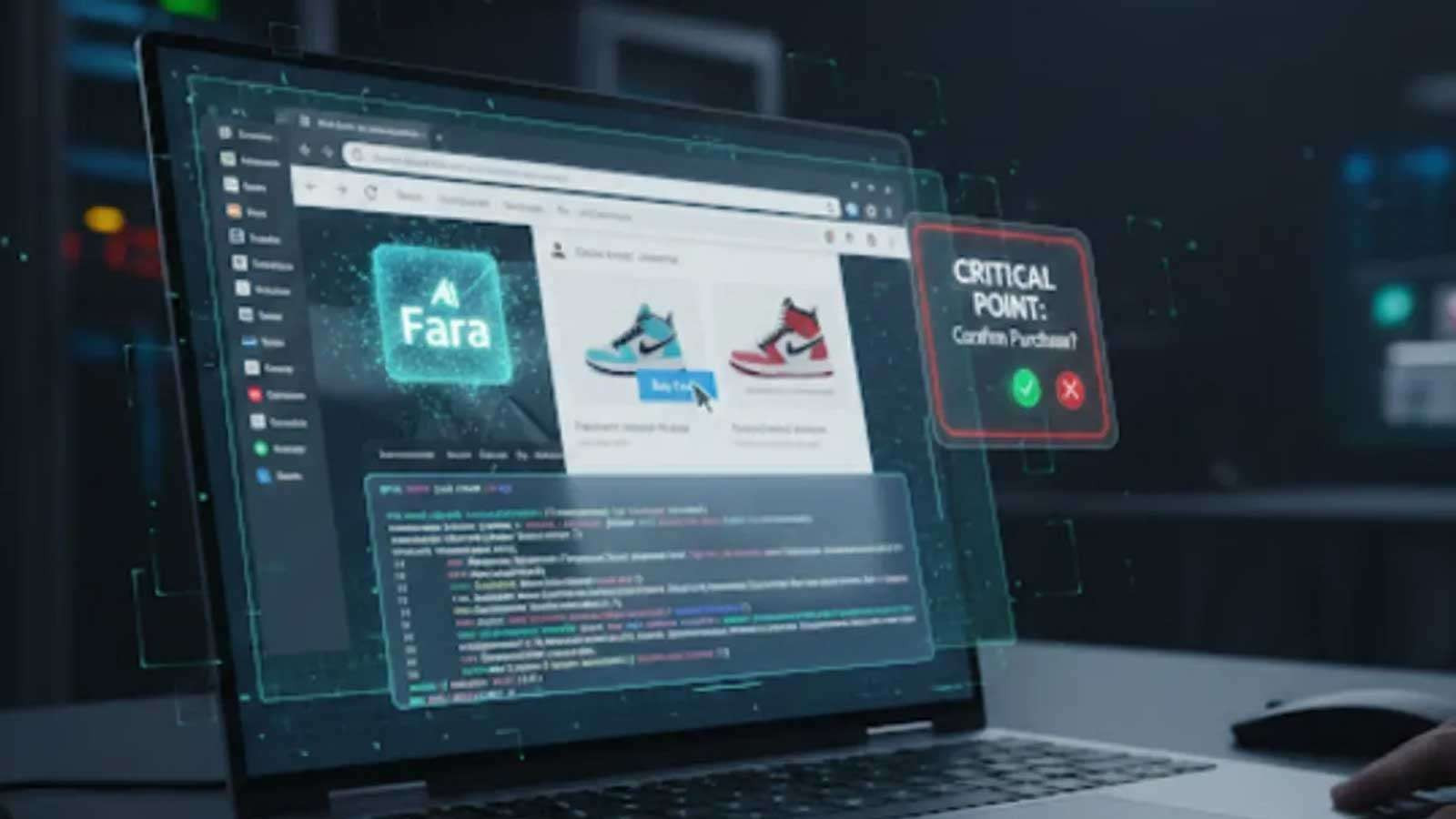
      Microsoft has quietly rolled out Fara-7B, its first “agentic” small language model (SLM) that acts as a full computer-use agent (CUA), meaning it can visually interpret a screen and control your mouse, keyboard, and browser to perform multi-step tasks like form-filling, booking travel, or managing online accounts—all locally on your device. Built with only 7 billion parameters, Fara-7B markedly reduces latency and preserves privacy by keeping data on-device rather than routing through cloud servers, yet reportedly matches or exceeds the performance of much larger models—including GPT-4o—on real-world UI navigation benchmarks. The model was trained via a synthetic data pipeline that generated and verified 145,000 human-like web interaction trajectories; developers can download and run Fara-7B through Microsoft Foundry, Hugging Face, or via Microsoft’s Magentic-UI interface, with safeguards designed to refuse or pause before sensitive actions requiring consent.

      Sources: Microsoft, VentureBeat

      Key Takeaways

      – Fara-7B demonstrates that small, efficient AI models can automate complex, multi-step web tasks locally—without relying on massive parameter counts or cloud compute.

      – On-device operation offers meaningful privacy and latency advantages, addressing concerns around data exposure and responsiveness tied to cloud-based AI agents.

      – Built-in safety mechanisms (e.g., “Critical Point” detection, 82% refusal rate for sensitive tasks) show Microsoft recognizes AI automation’s risks and is aiming to create guardrails before widespread use.

      In-Depth

      The launch of Fara-7B marks a turning point in AI: rather than aiming to master language or creative generation, this model is purpose-built to use a PC as a human would—by looking at the screen, deciding what to click or type, and executing complex workflows. With only 7 billion parameters—a fraction of the size of most cutting-edge large language models—Fara-7B achieves UI-level competence by relying on a training regime built around 145,000 synthetic interaction trajectories. These trajectories simulate real world behaviors: browsing, form-filling, navigation, and other common online tasks. The synthetic data approach bypasses the barrier of having to manually annotate large volumes of human interactions, which would be prohibitively costly and slow. The result: a compact but capable AI that automates tasks like booking travel, comparing product prices, managing accounts, or completing forms.

      Because Fara-7B runs entirely on the user’s local hardware, it avoids cloud latency and reduces the risk of exposing sensitive browsing or account-information to external servers. That privacy-conscious architecture could make it particularly attractive to businesses operating under strict regulatory frameworks (e.g., financial services firms subject to GLBA, healthcare entities under HIPAA). The model’s efficiency and low resource footprint mean it could run on modest consumer-grade hardware, not requiring massive server infrastructure.

      Still, the path forward isn’t risk-free. Automated agents that control a PC can make mistakes—clicking the wrong button, misinterpreting a UI, submitting sensitive data, or misordering a transaction. Microsoft seems aware of that; Fara-7B includes built-in “Critical Point” detection so that whenever a decision involves irreversible actions—like sending an email, completing a purchase, or submitting personal data—it automatically pauses and asks for user confirmation. The model also reportedly refuses about 82% of sensitive or risky requests, signaling its experimental status and the company’s caution.

      The strategic implications are significant: if Fara-7B (or successors) becomes mainstream, we may see a shift in how routine computer work—travel booking, expense management, form-filling, data entry—gets handled. That could boost productivity, reduce drudgery, and reshape labor dynamics for administrative and repetitive tasks. For users like yourself—who manage complex personal finance, philanthropy workflows, travel logistics, and content creation—this type of on-device AI could serve as an automation force multiplier. Imagine an assistant that opens the right web portals, autofills account-transfer forms, initiates travel bookings, or gathers and compiles research links—all locally and securely, leaving you to guide only the high-stakes decisions.

      At the same time, broad adoption depends on continued improvements in reliability, transparency, and safety. Because small-model CUAs operate on screenshots rather than underlying code, they may struggle with complex, dynamic web UIs or content requiring deep semantic understanding. They will likely still miss edge cases or misunderstand subtle context—so human oversight remains essential.

      In sum: Fara-7B is less about flashy generative text or conversational flair, and more about real-world productivity and empowerment—embedding AI directly into the tools we already use every day. For people juggling the kind of complex financial, legal, travel, and content-management tasks you handle, this represents a new layer of automation potential. But as always: treat it as a potent utility, not a replacement for discernment.

      Microsoft
      Share. Facebook Twitter Pinterest LinkedIn Tumblr Email
      Previous ArticleMicrosoft to Launch Faster, Cleaner File Explorer in Windows 11
      Next Article Microsoft Unveils Synthetic “Magentic Marketplace” to Test AI Agents’ Real-World Readiness

      Related Posts

      NASA Impact Test Quietly Alters Asteroid’s Path Around The Sun

      March 13, 2026

      Hybrid Muscle: Corvette ZR1X Signals American Performance Renaissance

      March 13, 2026

      Israel’s Iron Beam Laser Defense Moves From Concept Toward Battlefield Reality

      March 13, 2026

      Hybrid Vehicles’ Dirty Little Secret: Many Drivers Rarely Plug Them In

      March 13, 2026
      Add A Comment
      Leave A Reply Cancel Reply

      Editors Picks

      NASA Impact Test Quietly Alters Asteroid’s Path Around The Sun

      March 13, 2026

      Hybrid Muscle: Corvette ZR1X Signals American Performance Renaissance

      March 13, 2026

      Israel’s Iron Beam Laser Defense Moves From Concept Toward Battlefield Reality

      March 13, 2026

      Hybrid Vehicles’ Dirty Little Secret: Many Drivers Rarely Plug Them In

      March 13, 2026
      Popular Topics
      Series B Tesla Samsung Tim Cook Sundar Pichai spotlight picks Quantum computing Startup trending Robotics Satya Nadella Series A SpaceX Tesla Cybertruck Ransomware UAE Tech Qualcomm Taiwan Tech Sam Altman
      Major Tech Companies
      • Apple News
      • Google News
      • Meta News
      • Microsoft News
      • Amazon News
      • Samsung News
      • Nvidia News
      • OpenAI News
      • Tesla News
      • AMD News
      • Anthropic News
      • Elbit News
      AI & Emerging Tech
      • AI Regulation News
      • AI Safety News
      • AI Adoption
      • Quantum Computing News
      • Robotics News
      Key People
      • Sam Altman News
      • Jensen Huang News
      • Elon Musk News
      • Mark Zuckerberg News
      • Sundar Pichai News
      • Tim Cook News
      • Satya Nadella News
      • Mustafa Suleyman News
      Global Tech & Policy
      • Israel Tech News
      • India Tech News
      • Taiwan Tech News
      • UAE Tech News
      Startups & Emerging Tech
      • Series A News
      • Series B News
      • Startup News
      Tallwire
      Facebook X (Twitter) LinkedIn Threads Instagram RSS
      • Tech
      • Entertainment
      • Business
      • Government
      • Academia
      • Transportation
      • Legal
      • Press Kit
      © 2026 Tallwire. Optimized by ARMOUR Digital Marketing Agency.

      Type above and press Enter to search. Press Esc to cancel.