

Close Menu

    Subscribe to Updates

    Get the latest tech news from Tallwire.

      What's Hot

      Landmark Social Media Trial Puts Youth ‘Addiction’ Claims in the Spotlight

      March 3, 2026

      Landmark Trial Puts Social Media Giants on the Defensive Over Youth Addiction Claims

      March 3, 2026

      Block’s AI Layoffs: Jack Dorsey Cuts 4,000 Jobs Citing Artificial Intelligence Productivity

      March 3, 2026
      Facebook X (Twitter) Instagram
      • Tech
      • AI
      • Get In Touch
      Facebook X (Twitter) LinkedIn
      TallwireTallwire
      • Tech

        Landmark Trial Puts Social Media Giants on the Defensive Over Youth Addiction Claims

        March 3, 2026

        Landmark Social Media Trial Puts Youth ‘Addiction’ Claims in the Spotlight

        March 3, 2026

        Cisco Warns Of Long-Running Exploitation Of Critical Network Vulnerability

        March 2, 2026

        Amazon Overtakes Walmart As America’s Largest Company By Revenue

        March 1, 2026

        Chinese Sellers Peddling Anti-Drone Weapons On TikTok Raise Security Alarms

        March 1, 2026
      • AI

        OpenAI $110 Billion Funding Round Fails to Move Markets and Ease Inflation Concerns

        March 3, 2026

        Block’s AI Layoffs: Jack Dorsey Cuts 4,000 Jobs Citing Artificial Intelligence Productivity

        March 3, 2026

        Trump Administration Bars Anthropic AI Technology From Federal Use

        March 3, 2026

        OpenAI Announces Pentagon Partnership With Technical Safeguards

        March 2, 2026

        OpenAI Employee Dismissed After Using Confidential Info for Prediction Market Trades

        March 2, 2026
      • Security

        Defense Contractor Executive Jailed After Selling Sensitive U.S. Cyber Tools to Russia

        March 3, 2026

        Japan Calls For Urgent Countermeasures Over China-Linked Influence Operation

        March 3, 2026

        Spyware Executive Sentenced In Greece Over Illegal Wiretapping Of Politicians And Journalists

        March 2, 2026

        Instagram To Alert Parents When Teens Search For Suicide And Self-Harm Terms

        March 2, 2026

        CISA Leadership Shake-Up Follows Turbulent Year At Cybersecurity Agency

        March 2, 2026
      • Health

        Landmark Trial Puts Social Media Giants on the Defensive Over Youth Addiction Claims

        March 3, 2026

        Landmark Social Media Trial Puts Youth ‘Addiction’ Claims in the Spotlight

        March 3, 2026

        Social Media Addiction Trial Draws Grieving Parents Seeking Accountability From Tech Platforms

        February 19, 2026

        Portugal’s Parliament OKs Law to Restrict Children’s Social Media Access With Parental Consent

        February 18, 2026

        Parents Paint 108 Names, Demand Snapchat Reform After Deadly Fentanyl Claims

        February 18, 2026
      • Science

        Astronomers Confirm Discovery Of Galaxy Nearly Entirely Composed Of Dark Matter

        March 1, 2026

        Microsoft Claims 100 Percent Renewable Energy Match Across Global Electricity Use

        February 28, 2026

        Taara Beam Launch Brings 25Gbps Optical Wireless Networks to Cities

        February 27, 2026

        Large Hadron Collider Enters Third Shutdown For Major Upgrade

        February 26, 2026

        Google Phases Out Android’s Built-In Weather App, Replacing It With Search-Based Forecasts

        February 25, 2026
      • Tech

        Sam Altman Says ‘AI Washing’ Is Being Used to Mask Corporate Layoffs

        February 28, 2026

        Zuckerberg Testifies In Landmark Trial Over Alleged Teen Social Media Harms

        February 23, 2026

        Gay Tech Networks Under Spotlight In Silicon Valley Culture Debate

        February 23, 2026

        Google Co-Founder’s Epstein Contacts Reignite Scrutiny of Elite Tech Circles

        February 7, 2026

        Bill Gates Denies “Absolutely Absurd” Claims in Newly Released Epstein Files

        February 6, 2026
      TallwireTallwire
      Home»Tech»Breakthrough in Brain-Mimicking Hardware Sets Stage for More Energy-Efficient AI
      Tech

      Breakthrough in Brain-Mimicking Hardware Sets Stage for More Energy-Efficient AI

      Updated:February 21, 20265 Mins Read
      Facebook Twitter Pinterest LinkedIn Tumblr Email
      Breakthrough in Brain-Mimicking Hardware Sets Stage for More Energy-Efficient AI
      Breakthrough in Brain-Mimicking Hardware Sets Stage for More Energy-Efficient AI
      Share
      Facebook Twitter LinkedIn Pinterest Email

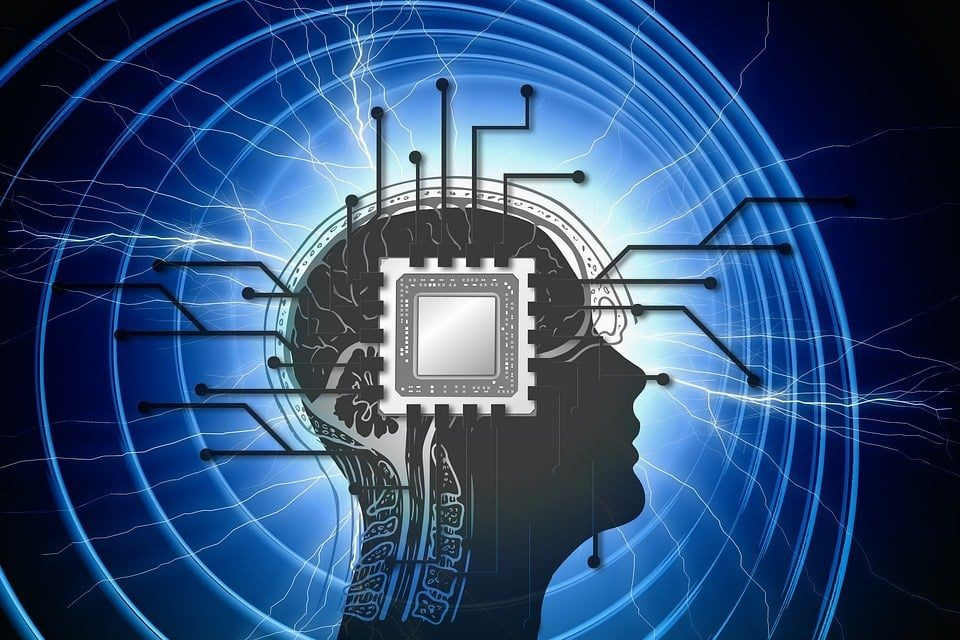
      Scientists at the University of Southern California have developed a new type of artificial “neuron” using a diffusive memristor stacked with a resistor and transistor that physically emulates the chemical and electrical operations of brain cells, rather than just their software simulation. This system replicates complex behaviours of biological neurons—including ion-driven spiking, leaky integration, stochastic firing and refractory periods—while occupying a footprint as small as a single transistor and consuming orders of magnitude less power than conventional chips. The breakthrough, published in Nature Electronics, may bring us significantly closer to neuromorphic computing architectures suited for artificial general intelligence.

      Sources: SciTech Daily, USC.edu

      Key Takeaways

      – These artificial neurons use ion-based dynamics (silver ions diffusing in a memristor) to replicate not just neural network models, but biologically-inspired hardware behaviour, enabling spikes, thresholds and leakiness in a compact footprint.

      – The technology promises dramatic gains in energy efficiency and size reduction compared to conventional AI hardware, potentially overcoming a major bottleneck in scaling large-language-models and other AI systems.

      – Significant hurdles remain for commercial use—most notably compatibility with standard semiconductor fabrication and finding ion materials (silver is used now, but alternatives will be needed) and scaling large arrays of these devices for full neuromorphic systems.

      In-Depth

      In recent years the AI world has been dominated by software breakthroughs: larger models, more data, faster GPUs. But underlying that progress lies a persistent hardware challenge: energy consumption, heat dissipation, chip real-estate and diminishing returns as Moore’s Law slows down. That’s why this development at USC matters: the team built artificial neurons that don’t just simulate neural behaviour in code or emulate it in digital form, but physically replicate many of the hallmark behaviours of biological brain cells by leveraging ion-dynamics in hardware.

      In the study, each artificial neuron consists of a diffusive memristor, a resistor, and a transistor—stacked in a tiny footprint (~4 µm² per neuron) inside a chip. In practice, silver-ions embedded in an oxide matrix diffuse under an applied electric field, forming and dissolving conductive filaments; this movement of atoms mimics how ions move across neuronal membranes in real brains. That ionic diffusion supports leaky integration (the gradual build-up of potential), threshold-triggered spiking (when potentials exceed a threshold), a refractory period (a brief time when the neuron is less excitable), intrinsic plasticity (its internal state adapts) and stochastic (noise-driven) behaviour. All of these mimic real neuron behaviours more faithfully than previous silicon-only approaches, which often rely on software abstractions and large transistor counts. The team reports that each neuron can be realized with a footprint comparable to a single transistor rather than dozens or hundreds, and energy consumption is dramatically lower. The lead researcher, Prof. Jin‑Woo Han (also referenced as Joshua Yang), points out that the biological brain operates on about 20 watts of power while current high-end AI systems consume kilowatts or more. Bridging that gap could unlock major gains in sustainability and deployment (e.g., on-device AI, battery-powered inference, edge computing).

      From a conservative vantage, this breakthrough has several important implications. First, it reinforces that hardware innovation—especially hardware mirroring biology—remains critical for the next frontier of AI, not just bigger models or more training data. Second, the potential to drastically cut power and chip area means that AI could move beyond data-centers and cloud farms into more pervasive, embedded, and accessible contexts—without relying on ever-increasing energy budgets. Third, there’s a national-security and economic dimension: nations that master neuromorphic hardware stand to gain strategic advantage not only in commercial AI, but in defense and computing sovereignty.

      That said, we must remain cautious. The current work uses silver ions—a material not yet compatible with mainstream CMOS (complementary metal-oxide-semiconductor) fabrication lines used in most chips worldwide. For commercial viability, materials that meet reliability, temperature, lifespan and cost requirements must be found. Moreover, while single-neuron behaviour is promising, the key tests lie in large-scale integration: networks of millions or billions of such artificial neurons, with synapses and interconnects, real-world training and resilience to defects. Scaling up from lab demonstration to manufacturing faces enormous engineering, yield, supply-chain and thermal-management challenges. Lastly, as hardware becomes more brain-like, questions of architecture edges blur: will we still program these systems as we do conventional computers, or will they require new paradigms of training, design and governance? From a policy and societal viewpoint, the ability to mass-deploy low-energy AI could accelerate both beneficial uses (healthcare, rural services, edge robotics) and more worrisome ones (surveillance, autonomous weapons, pervasive monitoring).

      In short, the USC team’s work points toward a major inflection point: hardware that doesn’t just mimic neural networks in software, but truly replicates the analog, ionic, dynamic behaviour of neurons—offering orders-of-magnitude gains in efficiency. For real estate-scale AI, for on-device intelligence, for smarter, lower-power devices, this is exciting. But for mainstream adoption, the journey from single-chip demo to industry-scale deployment remains long, and conservative stakeholders should track materials compatibility, scalability, and downstream ecosystem readiness.

      In the coming years we’ll see whether neuromorphic chips built on this kind of technology become commercially viable, whether they enable widespread smart devices that today’s silicon cannot support, and whether they herald a broader shift in the AI stack—from cloud and GPU farms to embedded, brain-like processors. If so, this might be a foundational hardware milestone for “AI everywhere” rather than “AI-only in big data-centres.” The economic and geopolitical implications of that (especially for the U.S., China and allied tech ecosystems) could be substantial.

      Robotics
      Share. Facebook Twitter Pinterest LinkedIn Tumblr Email
      Previous ArticleBreakthrough: Chips Generate Multiple Laser Colors Without Active Tuning
      Next Article Breakthrough in Quantum Communications—Researchers Achieve Teleportation Over Live Internet Fiber

      Related Posts

      Landmark Trial Puts Social Media Giants on the Defensive Over Youth Addiction Claims

      March 3, 2026

      Landmark Social Media Trial Puts Youth ‘Addiction’ Claims in the Spotlight

      March 3, 2026

      Cisco Warns Of Long-Running Exploitation Of Critical Network Vulnerability

      March 2, 2026

      Amazon Overtakes Walmart As America’s Largest Company By Revenue

      March 1, 2026
      Add A Comment
      Leave A Reply Cancel Reply

      Editors Picks

      Landmark Trial Puts Social Media Giants on the Defensive Over Youth Addiction Claims

      March 3, 2026

      Landmark Social Media Trial Puts Youth ‘Addiction’ Claims in the Spotlight

      March 3, 2026

      Cisco Warns Of Long-Running Exploitation Of Critical Network Vulnerability

      March 2, 2026

      Amazon Overtakes Walmart As America’s Largest Company By Revenue

      March 1, 2026
      Popular Topics
      Startup spotlight Tesla Cybertruck Tim Cook Taiwan Tech UAE Tech picks trending Satya Nadella Series B Sundar Pichai Sam Altman Ransomware Tesla SpaceX Samsung Series A Quantum computing Robotics Qualcomm
      Major Tech Companies
      • Apple News
      • Google News
      • Meta News
      • Microsoft News
      • Amazon News
      • Samsung News
      • Nvidia News
      • OpenAI News
      • Tesla News
      • AMD News
      • Anthropic News
      • Elbit News
      AI & Emerging Tech
      • AI Regulation News
      • AI Safety News
      • AI Adoption
      • Quantum Computing News
      • Robotics News
      Key People
      • Sam Altman News
      • Jensen Huang News
      • Elon Musk News
      • Mark Zuckerberg News
      • Sundar Pichai News
      • Tim Cook News
      • Satya Nadella News
      • Mustafa Suleyman News
      Global Tech & Policy
      • Israel Tech News
      • India Tech News
      • Taiwan Tech News
      • UAE Tech News
      Startups & Emerging Tech
      • Series A News
      • Series B News
      • Startup News
      Tallwire
      Facebook X (Twitter) LinkedIn Threads Instagram RSS
      • Tech
      • Entertainment
      • Business
      • Government
      • Academia
      • Transportation
      • Legal
      • Press Kit
      © 2026 Tallwire. Optimized by ARMOUR Digital Marketing Agency.

      Type above and press Enter to search. Press Esc to cancel.