

Close Menu

    Subscribe to Updates

    Get the latest tech news from Tallwire.

      What's Hot

      Health Data Of 3.4 Million Americans Exposed In Major Healthcare Technology Breach

      March 10, 2026

      Pentagon–Anthropic Clash Highlights Risks For Startups Chasing Federal AI Contracts

      March 10, 2026

      AI-Driven Security Audit Exposes Dozens Of Vulnerabilities In Major Web Browser

      March 9, 2026
      Facebook X (Twitter) Instagram
      • Tech
      • AI
      • Get In Touch
      Facebook X (Twitter) LinkedIn
      TallwireTallwire
      • Tech

        AI-Driven Security Audit Exposes Dozens Of Vulnerabilities In Major Web Browser

        March 9, 2026

        U.S. Approves Bill Gates-Backed TerraPower Reactor, Signaling Nuclear Energy Revival

        March 9, 2026

        AI War Games Reveal Chatbots Escalate Toward Nuclear Conflict

        March 8, 2026

        Nvidia Pulls Plug on China-Bound AI Chips Amid Escalating U.S.–China Tech Standoff

        March 8, 2026

        U.S. Military Deploys AI Targeting Tool in Iran Despite Government Feud With Its Creator

        March 8, 2026
      • AI

        Pentagon–Anthropic Clash Highlights Risks For Startups Chasing Federal AI Contracts

        March 10, 2026

        Microsoft, Google, And Amazon Maintain Access To Claude AI For Most Customers

        March 9, 2026

        AI-Driven Security Audit Exposes Dozens Of Vulnerabilities In Major Web Browser

        March 9, 2026

        OpenAI Delays ChatGPT “Adult Mode” Again Amid Safety And Priority Concerns

        March 9, 2026

        AI Agents Overwhelm Security Firms As Automation Outpaces Defenses

        March 8, 2026
      • Security

        Health Data Of 3.4 Million Americans Exposed In Major Healthcare Technology Breach

        March 10, 2026

        AI-Driven Security Audit Exposes Dozens Of Vulnerabilities In Major Web Browser

        March 9, 2026

        Cyberwarfare Takes Center Stage As Digital Attacks Shape The Modern Battlefield in Iran

        March 7, 2026

        Leaked Government-Grade iPhone Hacking Tools Now Power Global Cybercrime Campaign

        March 6, 2026

        International Crackdown Shutters Global Cybercrime Hub LeakBase

        March 6, 2026
      • Health

        Health Data Of 3.4 Million Americans Exposed In Major Healthcare Technology Breach

        March 10, 2026

        Expert Testimony Warns Social Media Is Rewiring Children’s Brains

        March 8, 2026

        Courtroom Scrutiny Grows Over Claims Instagram Tracked Usage While Pursuing Teens

        March 5, 2026

        Smartphone Use Creates A Daily “Vicious Cycle” Of Disconnection And Disengagement

        March 4, 2026

        Gaming Platforms Like Roblox Used by Crime Gangs to Groom Children, Victoria Warns

        March 4, 2026
      • Science

        U.S. Approves Bill Gates-Backed TerraPower Reactor, Signaling Nuclear Energy Revival

        March 9, 2026

        Study Warns Artificial Intelligence Can Be Used To Fabricate Scientific Research

        March 8, 2026

        Expert Testimony Warns Social Media Is Rewiring Children’s Brains

        March 8, 2026

        Floating Data Centers Could Beat Costly Space-Based AI Infrastructure

        March 6, 2026

        CERN Turns To Artificial Intelligence To Challenge Long-Standing Physics Theories

        March 6, 2026
      • Tech

        Apple Quietly Expands Executive Bench With Three New Leaders

        March 8, 2026

        Silicon Valley’s Political Experiment Faces Internal Revolt

        March 7, 2026

        Sam Altman Says ‘AI Washing’ Is Being Used to Mask Corporate Layoffs

        February 28, 2026

        Zuckerberg Testifies In Landmark Trial Over Alleged Teen Social Media Harms

        February 23, 2026

        Gay Tech Networks Under Spotlight In Silicon Valley Culture Debate

        February 23, 2026
      TallwireTallwire
      Home»Tech»Australia’s eSafety To Track Teen Well-Being After Under-16 Social Media Ban
      Tech

      Australia’s eSafety To Track Teen Well-Being After Under-16 Social Media Ban

      4 Mins Read
      Facebook Twitter Pinterest LinkedIn Tumblr Email
      Australia’s eSafety To Track Teen Well-Being After Under-16 Social Media Ban
      Australia’s eSafety To Track Teen Well-Being After Under-16 Social Media Ban
      Share
      Facebook Twitter LinkedIn Pinterest Email

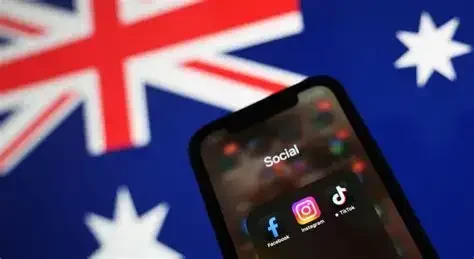
      Australia’s online safety watchdog, eSafety, says it will monitor teenagers’ well-being to evaluate the impact of a newly enacted law that bans users under 16 from maintaining or creating accounts on major social-media platforms. The tracking will include metrics such as sleep habits, social activity, time spent on sports or reading, medication use, and academic performance — aiming to assess whether removing social media access improves mental and physical health outcomes. This follows the December 10, 2025 implementation of the ban under the Online Safety Amendment (Social Media Minimum Age) Act 2024, which forces platforms to prevent under-16s from signing up or remaining logged in, though under-16s are still allowed to view content when logged out.

      Sources: Epoch Times, ABC.net

      Key Takeaways

      – The new law does not penalize under-16s or their parents — penalties apply only to platforms that fail to block under-16 accounts. Platforms must take “reasonable steps” to age-verify users.

      – The follow-up tracking by eSafety and collaborators aims to generate data on real-world impacts, beyond anecdotal or preliminary claims about mental health benefits.

      – Experts warn the ban could drive under-16s to migrate to newer, lesser-known apps or unregulated platforms, potentially sidestepping the safeguards and creating unforeseen risks.

      In-Depth

      Australia’s decision to enforce a minimum social-media age of 16 marks a bold—and controversial—experiment in online regulation. The law, known formally as the Online Safety Amendment (Social Media Minimum Age) Act 2024, comes after mounting concern over the impact of platforms like Instagram, TikTok, Snapchat, X, YouTube, Reddit, and others on youth mental health, social development, and well-being. Beginning December 10, 2025, these platforms are required to ensure that users under 16 cannot maintain or create accounts — or face fines up to A$50 million for non-compliance.

      Critics have long argued that social media can foster anxiety, body-image problems, cyberbullying, and addictive behavior among adolescents. Supporters of the ban say removing under-16s from the social-media ecosystem will shield them from harmful content and give them more time for sleep, physical activity, reading, real-world friendships, and study. But until now, much of the argument rested on theory and correlation — not hard data.

      That’s where the tracking initiative comes in. The government’s online-safety regulator, eSafety, has said it will monitor a variety of indicators including sleep, social interactions, sports, reading habits, medication use, and academic outcomes, in order to judge whether the ban meaningfully improves teens’ well-being or simply displaces them. A parallel academic effort — the “Connected Minds Study,” led by the Murdoch Children’s Research Institute (MCRI) and Deakin University — is recruiting 13- to 16-year-olds and their parents to take part in surveys and optional phone-use monitoring before and after the restrictions take hold.

      In theory, a ban implemented with follow-up evaluation could yield more than just moral signaling or regulatory posturing; it could produce empirical evidence about the effects of social media on youth development. If the data show improved sleep, better mental health, increased academic performance, or enhanced social connectedness offline — that would give weight to arguments for extended regulation, potentially inspiring similar moves by other countries.

      But there are inherent risks and challenges. For one, the policy only targets a limited set of “age-restricted social media platforms.” Messaging apps, games, forums, and emerging social networks fall outside the immediate scope — meaning under-16s may simply migrate to less regulated spaces where moderation is weaker or non-existent. That could make them harder to monitor and protect. Moreover, enforcement depends heavily on platforms’ willingness and ability to implement accurate age verification, which critics argue can either overreach (invading privacy) or underperform (letting determined teens bypass checks).

      Then there’s the question of unintended consequences. Restricting access to big, high-profile platforms may lead teens to gather on unregulated or fringe platforms — often with fewer safety features — undermining the original aim. Alternatively, being barred from social media could isolate young people socially, making it harder for them to maintain friendships, especially in a digital-first generation where so much of peer interaction already happens online.

      Finally, gauging “well-being” is complex. Improvements in sleep or reduced screen time might tell only part of the story. True emotional health, social satisfaction, and resilience are harder to measure. The metrics captured may not reflect long-term outcomes.

      In sum, Australia is undertaking an ambitious social experiment. By coupling legal restriction with empirical tracking, the government hopes to separate myth from reality — to show whether a social-media hiatus actually produces healthier, happier teens. If successful, it may reshape how democracies think about digital childhood. If not, it risks driving youth into darker corners of the Internet, trading one set of harms for another.

      Share. Facebook Twitter Pinterest LinkedIn Tumblr Email
      Previous ArticleAustralia Launches $14M “For The Good Of” Campaign to Justify New Under-16 Social Media Ban
      Next Article Australia’s New National AI Plan Raises Concerns Over Workforce Readiness

      Related Posts

      AI-Driven Security Audit Exposes Dozens Of Vulnerabilities In Major Web Browser

      March 9, 2026

      U.S. Approves Bill Gates-Backed TerraPower Reactor, Signaling Nuclear Energy Revival

      March 9, 2026

      AI War Games Reveal Chatbots Escalate Toward Nuclear Conflict

      March 8, 2026

      Nvidia Pulls Plug on China-Bound AI Chips Amid Escalating U.S.–China Tech Standoff

      March 8, 2026
      Add A Comment
      Leave A Reply Cancel Reply

      Editors Picks

      AI-Driven Security Audit Exposes Dozens Of Vulnerabilities In Major Web Browser

      March 9, 2026

      U.S. Approves Bill Gates-Backed TerraPower Reactor, Signaling Nuclear Energy Revival

      March 9, 2026

      AI War Games Reveal Chatbots Escalate Toward Nuclear Conflict

      March 8, 2026

      Nvidia Pulls Plug on China-Bound AI Chips Amid Escalating U.S.–China Tech Standoff

      March 8, 2026
      Popular Topics
      Quantum computing Sam Altman Series A Samsung SpaceX Startup spotlight Robotics Tesla Cybertruck trending Tim Cook Taiwan Tech Ransomware UAE Tech Series B Qualcomm Sundar Pichai picks Tesla Satya Nadella
      Major Tech Companies
      • Apple News
      • Google News
      • Meta News
      • Microsoft News
      • Amazon News
      • Samsung News
      • Nvidia News
      • OpenAI News
      • Tesla News
      • AMD News
      • Anthropic News
      • Elbit News
      AI & Emerging Tech
      • AI Regulation News
      • AI Safety News
      • AI Adoption
      • Quantum Computing News
      • Robotics News
      Key People
      • Sam Altman News
      • Jensen Huang News
      • Elon Musk News
      • Mark Zuckerberg News
      • Sundar Pichai News
      • Tim Cook News
      • Satya Nadella News
      • Mustafa Suleyman News
      Global Tech & Policy
      • Israel Tech News
      • India Tech News
      • Taiwan Tech News
      • UAE Tech News
      Startups & Emerging Tech
      • Series A News
      • Series B News
      • Startup News
      Tallwire
      Facebook X (Twitter) LinkedIn Threads Instagram RSS
      • Tech
      • Entertainment
      • Business
      • Government
      • Academia
      • Transportation
      • Legal
      • Press Kit
      © 2026 Tallwire. Optimized by ARMOUR Digital Marketing Agency.

      Type above and press Enter to search. Press Esc to cancel.